
Markets are starting Tuesday with one message above all others: geopolitics is now setting the pace for prices.
The US move to blockade Iranian ports has jolted oil, reshaped risk appetite and injected fresh uncertainty into Asia’s trading day just as China’s latest trade data hints at a more fragile global demand backdrop.
Investors are trying to price two opposing forces at once as immediate supply disruption and the possibility that Washington and Tehran still find a path back to talks.
A chokepoint with global reach
President Donald Trump’s decision to impose a blockade on Iranian ports has quickly become the market’s central geopolitical shock.
The US military said ships would be blocked from moving in and out of Iran’s ports.
The step threatens to keep roughly 2 million barrels a day of Iranian oil off the market and further tighten an already strained supply picture.
The Kremlin warned the move would damage global markets, underlining how quickly the fallout extends beyond the Middle East.
Even so, the White House is still signaling that diplomacy is not dead, with Vice President JD Vance saying the US made meaningful progress in talks and that the next move now rests with Tehran.
Oil spike, then repricing
Oil’s reaction shows how unstable sentiment remains.
After surging in the previous session as traders priced in a serious supply shock, crude pulled back in early Asian trading on Tuesday as hopes of renewed US-Iran dialogue tempered the panic bid.
Brent fell to about $97.50 a barrel and WTI to roughly $96.83, though both remained elevated after Monday’s sharp gains.
The US blockade had been extended east toward the Gulf of Oman and Arabian Sea, while two ships turned around in the strait as the measure took effect.
Analysts at ANZ estimate that about 10 million barrels per day of crude supply have already been effectively removed from the market.
Asia bets on relief
Asian equities took their cue from the retreat in oil and the tentative return of diplomatic optimism.
MSCI’s broad Asia-Pacific index outside Japan rose 1% in early trade, while Japan’s Nikkei and South Korea’s KOSPI each gained more than 2%.
The investors leaned into the view that the crisis may still be contained.
The move reflected a classic relief trade: risk assets recovered as crude and the dollar eased, even though the underlying geopolitical threat had not gone away.
That is the balancing act for markets now.
Investors are no longer trading a clean escalation story, but a more complicated one in which hard-power pressure and backchannel negotiation are unfolding at the same time.
China’s export engine slows
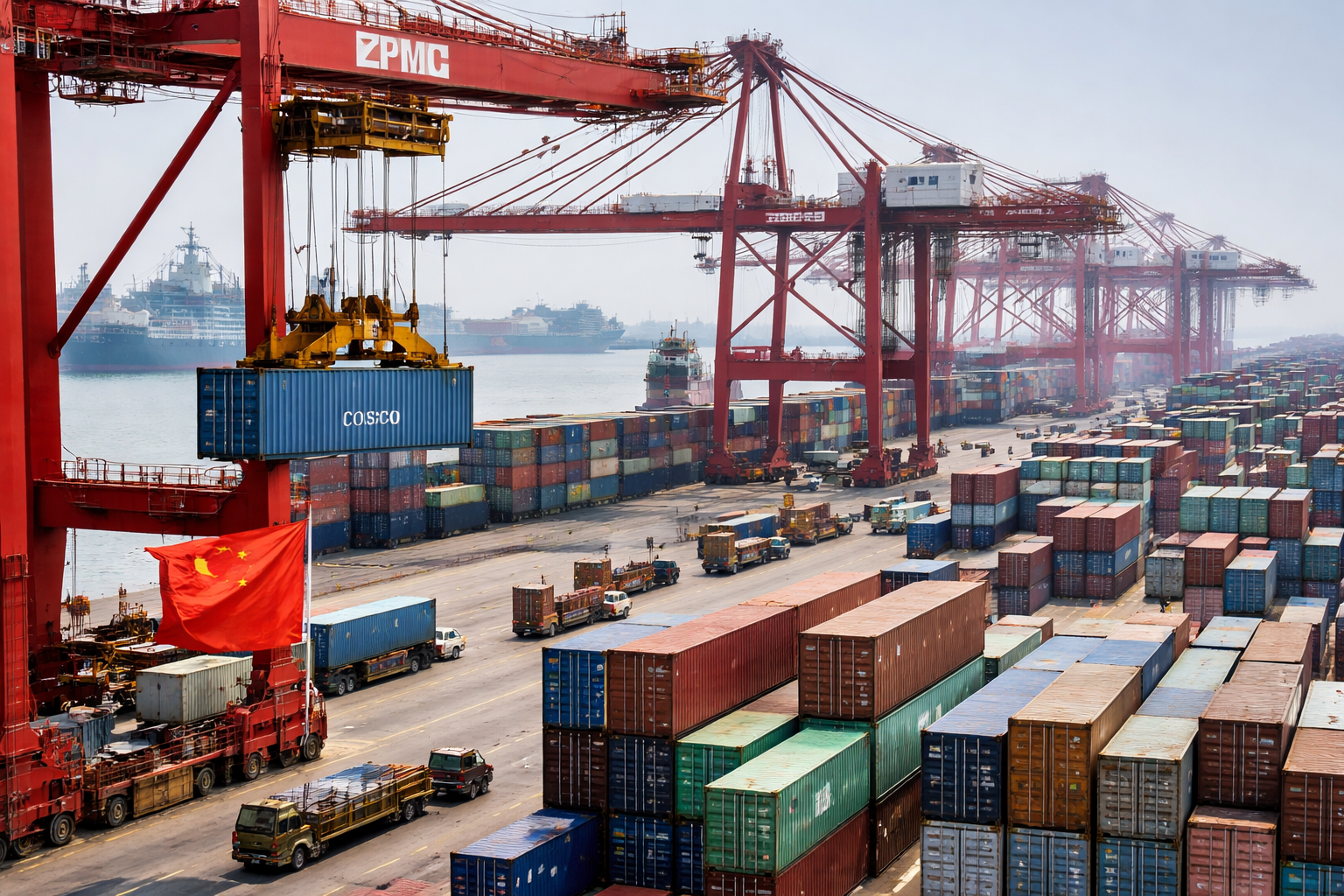
China’s March trade data added a more sobering macro signal to the morning.
Exports rose 2.5% from a year earlier, sharply below the 8.3% increase expected by economists and down from a 21.8% surge in the combined January-February period.
Imports, however, jumped 27.8%, the strongest performance since November 2021.
The numbers marked the first real test of whether enthusiasm around AI-related exports could offset the drag from a worsening energy shock and softer global demand.
China’s crude imports fell 2.8%, and natural gas imports dropped 10.7%, while economists now expect first-quarter GDP growth to have improved to 4.8% before cooling later in 2026.
The post Morning brief: oil shock fades, Asia climbs, China exports slow appeared first on Invezz