
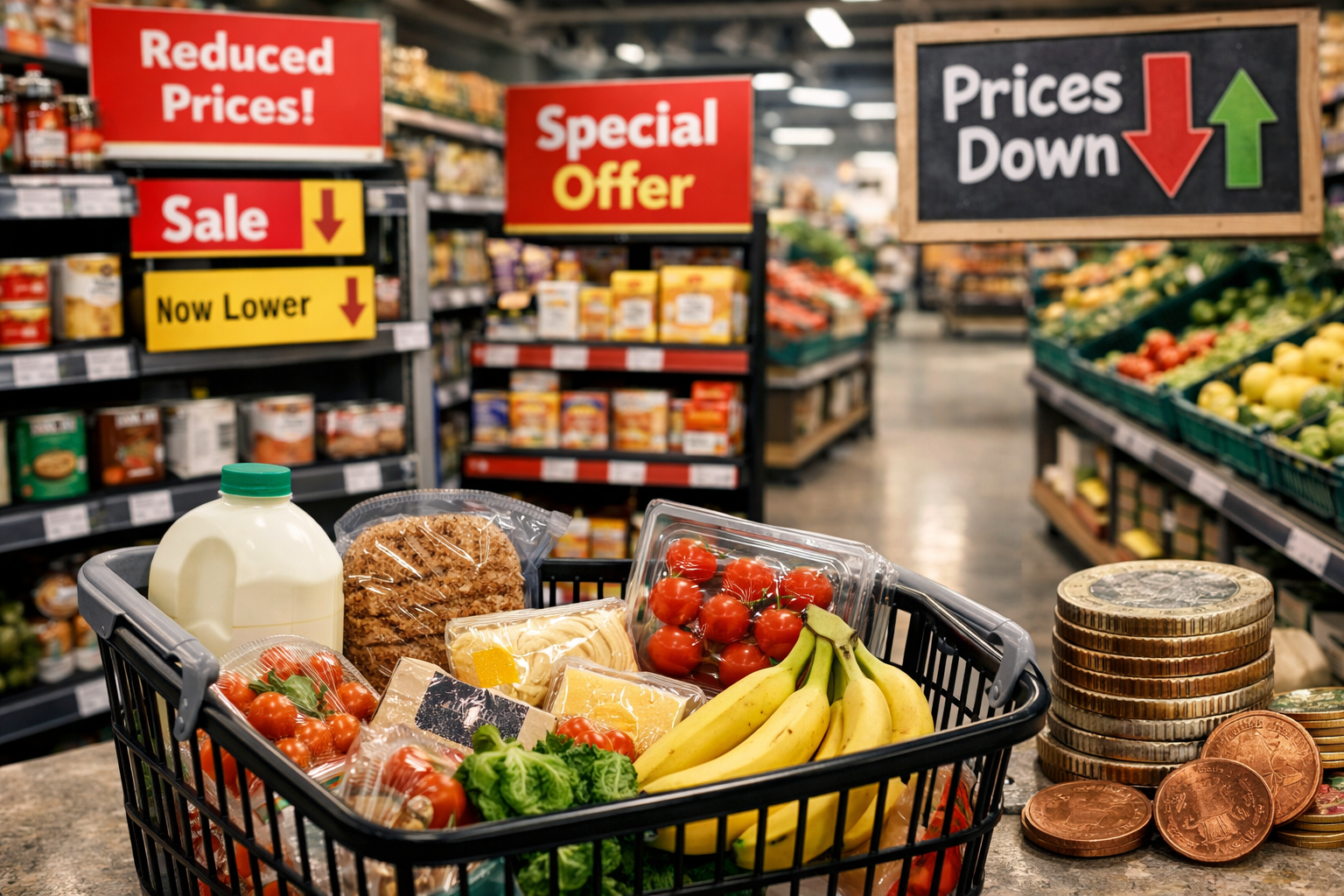
UK grocery inflation slowed again in late January, offering tentative relief to households still grappling with elevated living costs.
New figures from Worldpanel by Numerator show grocery price inflation eased to 4.0% in the four weeks to January 25, the lowest level since April last year.
The data provides an early read on food price pressures ahead of official UK inflation figures due on February 18.
Food costs remain a key focus for the Bank of England, which has repeatedly highlighted its role in shaping household inflation expectations.
Britain’s headline inflation stood at 3.4% in December, the highest among Group Seven economies, keeping pressure on policymakers and consumers alike.
Early signal ahead of inflation data
Worldpanel’s figures suggest that while price pressures are easing, grocery bills remain meaningfully higher than a year ago.
Inflation at 4.0% still implies continued cost increases, but at a slower pace than seen through much of 2024.
The timing is notable, as markets and policymakers look ahead to February’s official inflation release for clearer signals on whether broader price pressures are cooling.
Food inflation has been one of the more persistent components of UK consumer prices, making any sustained slowdown particularly significant for households and retailers.
Grocery spending grows as volumes lag
Despite easing inflation, total grocery spending continued to rise.
Worldpanel said UK grocery sales increased 3.8% year-on-year in value terms over the four-week period.
However, once inflation is stripped out, volumes declined, indicating that shoppers are still buying less in real terms.
This pattern underlines how consumers remain cautious, adjusting baskets and shopping habits rather than materially increasing consumption.
Price sensitivity continues to shape purchasing decisions, even as headline inflation indicators begin to soften.
Own label dominates baskets
Value considerations are increasingly shaping where and how shoppers spend.
Worldpanel said own-label products hit a record high, accounting for more than half of all grocery spending over the period.
The shift highlights continued trading down by consumers seeking cheaper alternatives amid lingering cost pressures.
The trend has become a structural feature of the UK grocery market, benefiting retailers with strong private-label ranges and squeezing branded suppliers facing tougher price negotiations and slower volume growth.
Winners and losers among retailers
Market share movements over the 12 weeks to January 25 show a widening gap between stronger performers and those under pressure.
Industry leader Tesco recorded sales growth of 4.4% year-on-year, lifting its market share by 20 basis points to 28.7%.
Second-placed Sainsbury’s posted faster growth, with sales up 5.3%, taking its share to 16.2%.
Discounters continued to outperform, with Lidl GB remaining the fastest-growing bricks-and-mortar retailer as sales climbed 10.1%.
Online, Ocado stayed the fastest-growing overall, reporting sales growth of 14.1%. In contrast, Asda continued to lose ground.
Its sales fell 3.7%, pushing its market share down 80 basis points year-on-year to 11.5%, underscoring ongoing challenges in a highly competitive market.
The post UK grocery inflation cools as food price pressures ease for shoppers appeared first on Invezz