
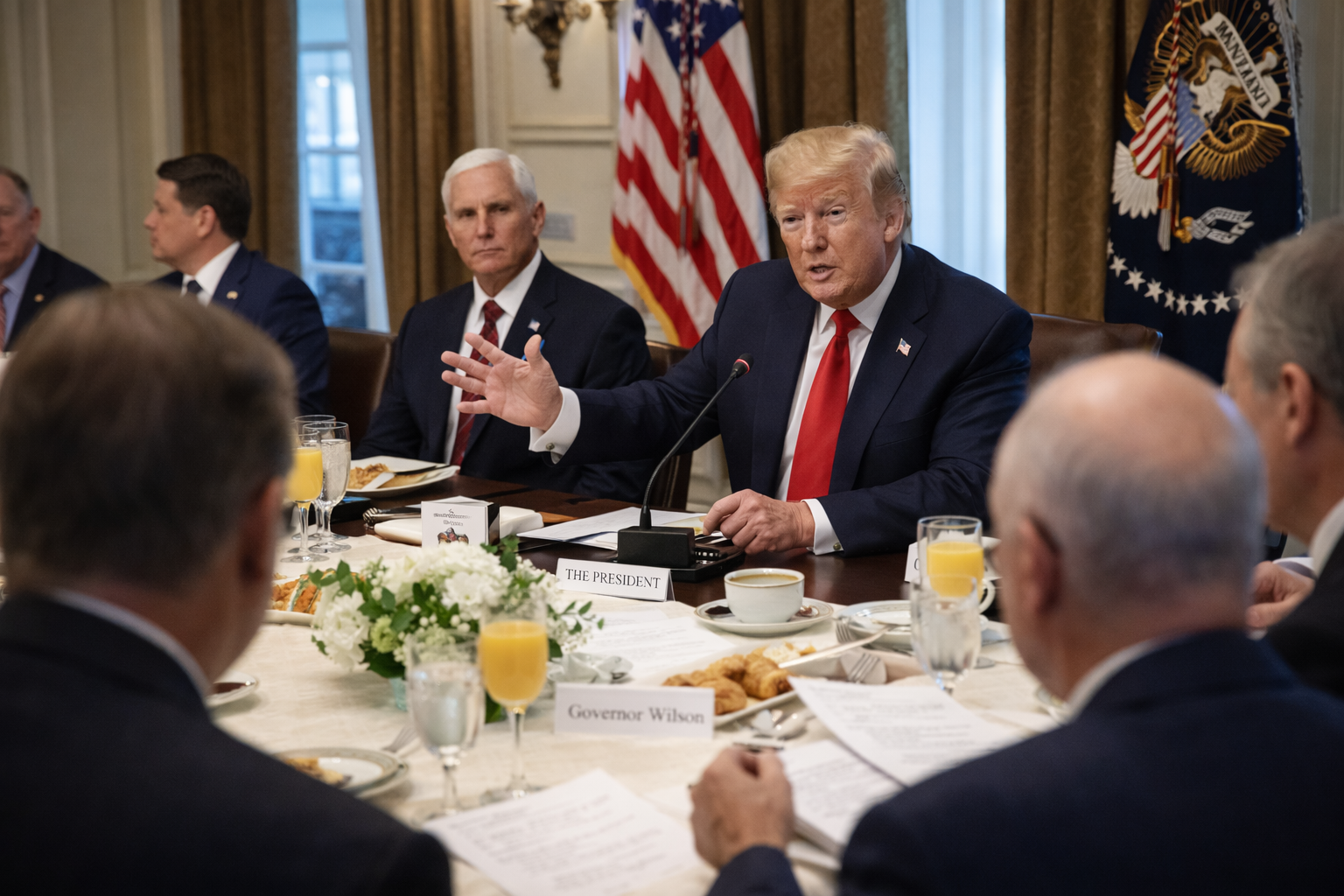
President Donald Trump said Friday he is “considering” a limited US military strike on Iran, a stark public escalation that nonetheless left investors, allies and lawmakers guessing about the basics.
Trump offered no further details when pressed by reporters at the White House, keeping the statement in the realm of a warning rather than an order.
The remarks landed as nuclear diplomacy with Tehran remains active, setting up a high-stakes weekend where markets and diplomats will be scanning for clearer signals from Washington.
Trump weighs Iran strike
Trump’s comments came after a reporter asked whether he was weighing a limited strike to pressure Iran into a deal over its nuclear program, and the president responded: “I guess I can say I am considering that.”
Trump “gave no other details,” underscoring that the administration has not publicly outlined a timeline, target set, or the legal rationale it would cite for any action.
That ambiguity is part of the story.
A “limited strike” can mean anything from a narrow hit on a small number of sites to a short campaign designed to degrade specific capabilities, and the White House did not define the term.
In parallel remarks earlier in the week, White House Press Secretary Karoline Leavitt told reporters that “there are many reasons and arguments one could make for a strike against Iran,” while also emphasizing that Iran would be “very wise” to reach an agreement with the administration.
Trump’s warning also arrives against a backdrop of heightened military and diplomatic attention on Iran, even as the administration says it is still open to a negotiated outcome.
Iran’s foreign minister, Abbas Araghchi, said his country expected to have a proposed deal ready within days after renewed nuclear talks with Washington.
The competing messages: diplomacy on one track, coercive pressure on another, have become a familiar feature of high-stakes negotiations, but the introduction of possible US strikes raises the temperature materially.
Reactions, risks, and what to watch
Iran’s initial public posture has been to keep talks alive while warning against threats.
Araghchi said threats and attacks would not shift Tehran’s stance, even as he described progress toward drafting a proposal for Washington.
That mix suggests Tehran is trying to signal it will not negotiate under duress, while still leaving room for a diplomatic off-ramp.
The risk for Washington is that even a “limited” action can trigger a broader cycle of retaliation, especially in a region with US forces, partners and shipping lanes that are sensitive to escalation.
The oil market’s biggest fear is a prolonged disruption of flows through the Strait of Hormuz if a US-Iran conflict intensifies.
Domestically, any move toward strikes will likely sharpen the debate over Congress’s role and notification timelines under US war powers practices, particularly if the administration shifts from signaling to execution.
That legal and political layer is unresolved for now because Trump has not described what he would authorise or when.
The post Trump signals possible military strike on Iran, offers few specifics appeared first on Invezz