
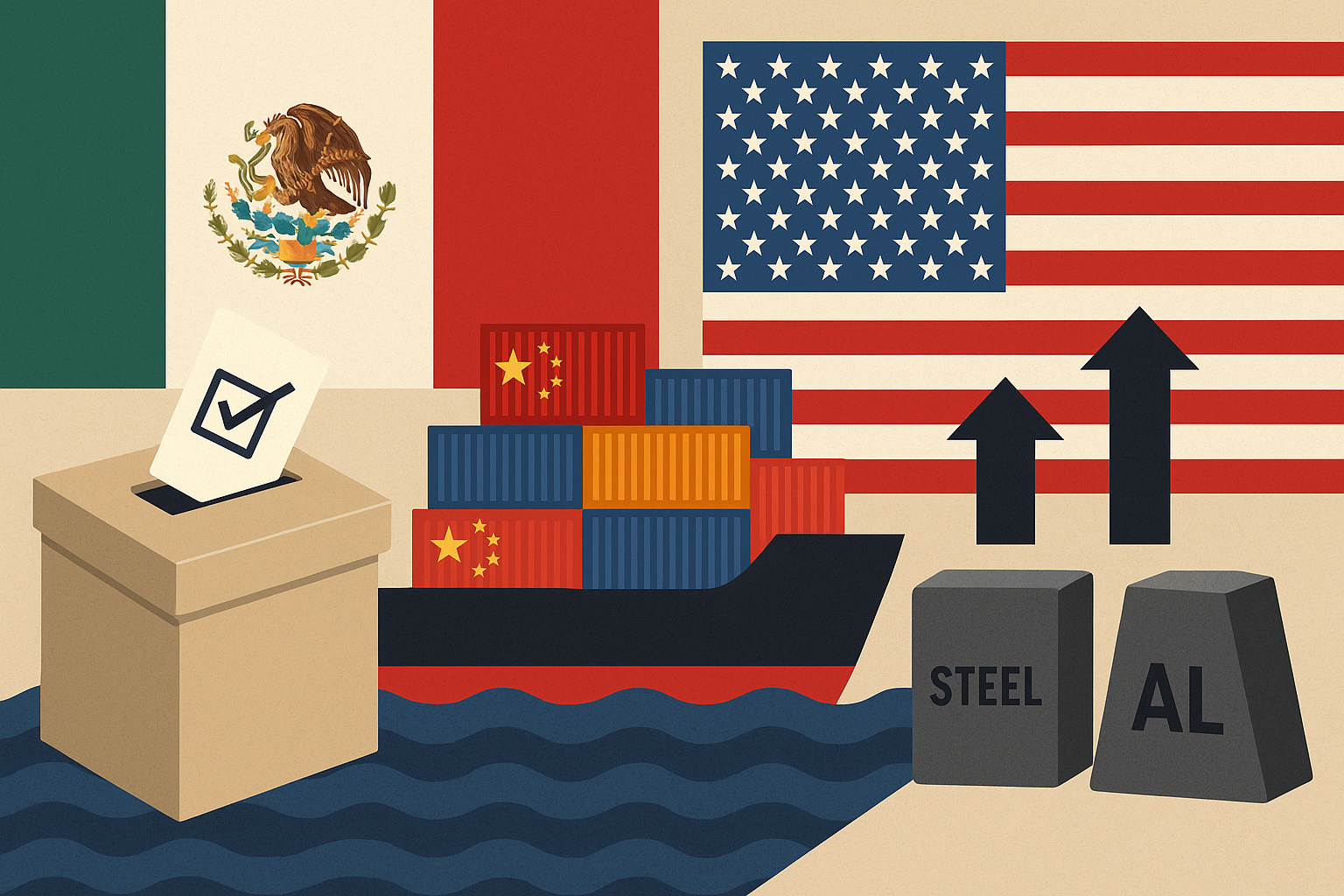
Mexico is heading into a decisive week as Congress prepares to vote on President Claudia Sheinbaum’s proposal to impose new tariffs on a wide range of Asian imports.
The plan, which targets China in particular, is being reshaped into a policy tool that could redefine Mexico’s global trade posture while also influencing its negotiations with the US.
With votes expected before Congress enters its year-end recess on December 15, the focus has shifted from domestic cost concerns to Mexico’s broader attempt to recast its role within North American supply chains.
Businesses and policymakers are watching closely as the bill moves forward after months of delays and revisions.
China tariff move and its political backdrop
The bill imposes tariffs of up to 50% on imports from Asia and formally began lower-house commission debate on Monday.
Sheinbaum’s administration first sent the proposal to Congress on Sept. 9, but lobbying from Asian governments and resistance from domestic industries slowed its path.
Manufacturers that rely on Chinese components warned of rising costs, and legislators, including several from the ruling party, raised concerns about damaging relations with a region that many view as essential for Mexico’s trade diversification.
After a joint review by the Finance and Economy ministries, more than 750 changes were made to the proposal. The initial list of more than 1,400 targeted products was reduced to just over 300 exemptions.
Despite the adjustments, the levies still cover goods including clothing, footwear, steel, aluminium, and auto parts.
Revenue impact and product range
Mexico’s Finance Ministry estimates that the tariff plan would generate an additional 51.9 billion pesos in import revenue in 2026, an 8.3% increase from 2024.
The changes in the product list show how the government attempted to balance industrial pressure with the broader goal of aligning Mexican trade policies more closely with North American partners.
The bill’s scope demonstrates how Mexico intends to protect local producers while signalling a firmer stance on competition from Asia.
US relations and expectations of tariff relief
As Mexico raises barriers against what officials describe as unfair competition, the timing of these measures has fed speculation among local businesses about a potential shift in trade dynamics with the US.
The idea of strengthening a collective manufacturing front under the concept sometimes described as Fortress North America has encouraged expectations that Washington may respond with adjustments of its own.
Companies in Mexico believe that implementing tariffs on China could open space for future US relief on Mexican steel and aluminium.
It is still uncertain whether such relief would come as lower tariff rates or tariff-free import quotas. The discussions remain private and have not been publicly detailed.
Steel duties and the Trump order
The situation remains sensitive because of the tariff backdrop already in place. On June 3, President Donald Trump raised duties on all steel and aluminium imports from Mexico to 50% from 25%.
His executive order stated that the earlier rate had not been sufficient to support US production.
At the time, as per Bloomberg, Mexico’s Economy Minister Marcelo Ebrard described the increase as unfair, unsustainable, and inconvenient.
The post Mexico to increase tariffs on China to ease tensions with US appeared first on Invezz