
Artificial intelligence is the real deal right now. Hundreds of billions of dollars are being pumped into a technology that, many say, will change the course of human civilization.
It is also the reason a lot of people are worried. But it is also the reason some are extremely delighted.
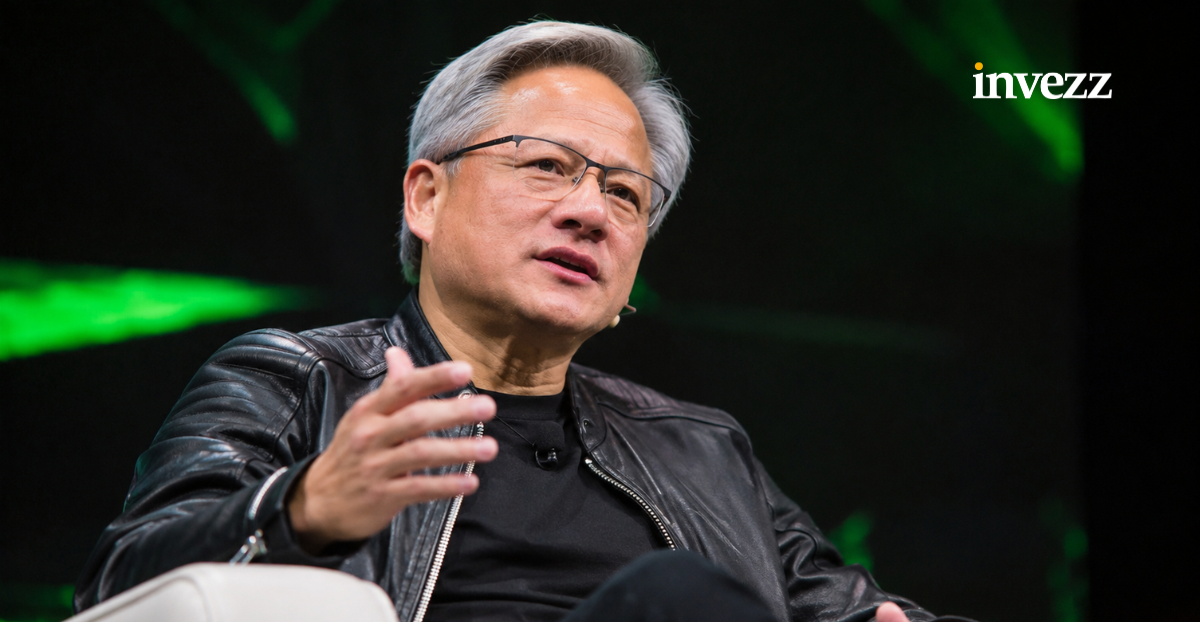
One man who has been among the biggest beneficiaries of this is a soft-spoken engineer, usually seen wearing a black leather jacket: Jensen Huang.
For the past few years, Huang has been the most visible face of the AI boom.
He is the man credited with building the industrial backbone of this new era.
Now, that same man is at the center of a serious controversy.
Nvidia’s board on Sunday announced an independent investigation after media reports alleged that its founder and CEO had been the target of a foreign intelligence operation involving a Chinese businesswoman named Alice Huang.
Huang separately acknowledged in a message to employees that he had been unfaithful to his wife and apologized to his family and colleagues.
US intelligence officials have reportedly identified Alice Huang as a Chinese intelligence asset who had been passing commercial information to Beijing.
Below, we take a look at who Jensen Huang is, how he built Nvidia and how he became so important that Chinese intelligence is reportedly seeking information from him.
Who is Jensen Huang?
Jensen Huang was born in 1963 in Tainan, Taiwan.
When he was nine, his parents sent him and his older brother to the United States to live with an uncle in Tacoma, Washington.
A year later, the brothers were enrolled at Oneida Baptist Institute in Kentucky. Huang has spoken about the difficult experience, including being bullied and having to scrub toilets in the dormitory.
He studied electrical engineering at Oregon State University and earned a master’s degree from Stanford University.
Before starting his own company, Huang worked as a chip designer, first at LSI Logic and later at AMD.
In 1993, at the age of 30, he co-founded Nvidia with two fellow engineers, Chris Malachowsky and Curtis Priem.
The idea was discussed over a meal at a Denny’s restaurant in San Jose, California.
Interestingly, Huang had himself worked at Denny’s as a dishwasher, busboy and waiter during his younger years.
He has been Nvidia’s only CEO since the company was founded.
Nvidia wasn’t always this important
For most of its history, Nvidia was known for its graphics cards.
Its chips, known as graphics processing units (GPUs), were primarily used to handle the complex calculations required in video games.
Basically, they helped make video games look better.
Realistic lighting, smoother movement and detailed virtual worlds on computer screens all depended on the kind of specialized processors Nvidia was developing.
However, success did not come easily.
In its early years, the company faced serious setbacks and came close to failure more than once.
Huang has often spoken about those near-death moments as experiences that shaped Nvidia’s culture of resilience.
For years, the company remained best known as a gaming and graphics business while quietly developing technology that would later prove essential for artificial intelligence.
How Huang became the face of the AI boom
When modern AI took off, researchers discovered that the same chips designed for graphics were exceptionally good at performing the massive mathematical calculations needed to train artificial intelligence models.
Nvidia’s GPUs, combined with its CUDA software platform, gave it a powerful advantage.
Almost every major AI lab and technology company began buying Nvidia chips in large quantities. Demand exploded.
Huang became the public face of that transformation.
He appeared at conferences in his signature leather jacket, explaining complex technology in simple terms and projecting confidence about the future.
Investors, governments and technology leaders began treating him as one of the central figures in the global AI race.
The company moved from being a successful specialized chipmaker to becoming a supplier of what many now consider essential infrastructure for the digital economy.
And Huang became the face of it all.
The AI race
Nvidia is not just another chipmaker.
Nvidia makes the specialized processors that power the artificial intelligence revolution but its advantage goes beyond the hardware.
Its CUDA software platform has become deeply embedded in the AI industry, allowing developers to build and run applications using Nvidia’s processors.
The company also sells complete computing systems, networking equipment and software, giving it an ecosystem that competitors have found difficult to replicate.
This is precisely why Nvidia has become so important to the competition between Washington and Beijing.
The United States has been restricting China’s access to its most advanced Nvidia processors since 2022, citing national security concerns and the possibility that the technology could strengthen China’s military and advanced computing capabilities.
For Washington, maintaining access to Nvidia’s most advanced technology for American companies while preventing its unrestricted transfer to China has become a major strategic priority.
And Huang is at the center of this.
As CEO, he controls the direction of a company whose chips are essential to the global AI industry.
He also has relationships with the world’s biggest technology companies, chip manufacturers, investors and policymakers.
His influence extends beyond Nvidia’s own business. The company has invested billions of dollars across the AI ecosystem, backing businesses involved in data centers, networking and computing infrastructure.
This makes the allegations surrounding his relationship with Alice Huang particularly sensitive.
If a foreign intelligence operation had managed to gain access to sensitive information or influenced Nvidia to further affect Washington’s policies on the matter, then the story is not just financial. It becomes geopolitical.
And this is why the episode has put an uncomfortable spotlight on Huang, who has become central to America’s ambitions to lead the next technological revolution.
The post Who is Jensen Huang and why is Nvidia so important in the AI race? appeared first on Invezz