
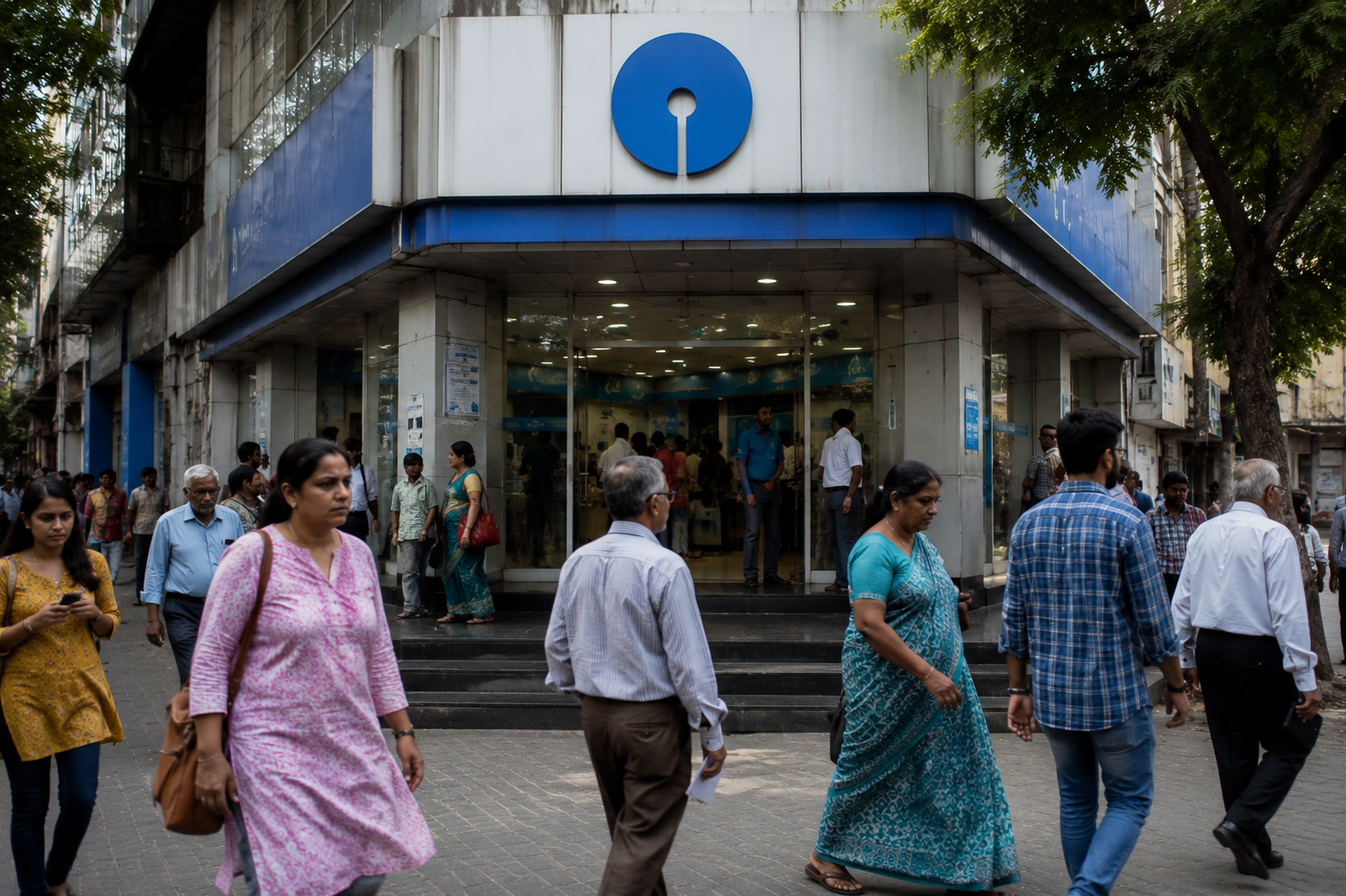
State Bank of India stock fell nearly 4% on Monday after the lender missed fourth-quarter profit estimates and warned that a prolonged Iran war could weigh on loan growth, prompting investors to reassess the near-term outlook for the stock.
The reaction reflected more than disappointment over one set of quarterly numbers.
In banking, an earnings miss combined with caution on growth tends to carry more weight because it affects expectations for future revenue, balance-sheet deployment and the pace at which a lender can expand its core business.
SBI’s comments therefore shifted the focus from the quarter just gone to whether external risks could begin to shape performance in the months ahead.
Why SBI stock fell?
SBI said loan growth could be hit if the Iran war is prolonged, though it did not elaborate further on the remarks cited by Reuters.
That lack of detail left investors with two concerns at once: first, that the quarter itself fell short of expectations, and second, that management may be seeing a more uncertain operating backdrop.
For bank investors, the growth outlook matters as much as the reported profit number.
Loan growth is one of the clearest signals of future earnings momentum because it influences interest income, overall business activity and the bank’s ability to deploy capital productively.
When management flags a risk to that trajectory, investors often move quickly to mark down expectations until they get more clarity.
The share-price move also suggests the market wants a fuller explanation of what drove the miss.
A weaker quarter can sometimes be overlooked if management offers a firm outlook on growth.
When a lender misses estimates and simultaneously warns that a geopolitical shock could affect demand for credit, the market is more likely to take a cautious view.
Why it matters
The warning on Iran adds a macroeconomic layer to the investment case.
A prolonged conflict could unsettle business sentiment, raise energy-related risks and make borrowers more cautious, particularly if uncertainty begins to affect spending and investment decisions more broadly.
That is why Monday’s decline in SBI shares matters beyond the day’s price action.
Investors are not only reacting to reported earnings; they are trying to judge whether management’s caution points to a temporary headline risk or to a more persistent drag on growth assumptions.
If the market starts to believe the latter, estimates for the coming quarters may need to be revised.
What investors will watch
The next step for the stock will depend on whether SBI provides more colour on the factors behind the earnings miss and on how it sees the growth outlook evolving.
Investors will want to know whether the warning on Iran reflects a broad internal concern about credit demand or simply a prudent acknowledgement of an external risk that may yet fade.
They will also watch for any further signals on how the bank plans to manage that uncertainty.
In the near term, the market is likely to remain focused on management commentary, credit growth trends and whether the lender can reassure investors that Monday’s caution does not signal a deeper slowdown in business momentum.
Until investors get a clearer explanation of the miss and a firmer read on the loan-growth outlook, the stock may remain under pressure as the market weighs earnings disappointment against geopolitical risk.
The post SBI stock falls 4% after profit miss and Iran war warning shakes investors appeared first on Invezz