
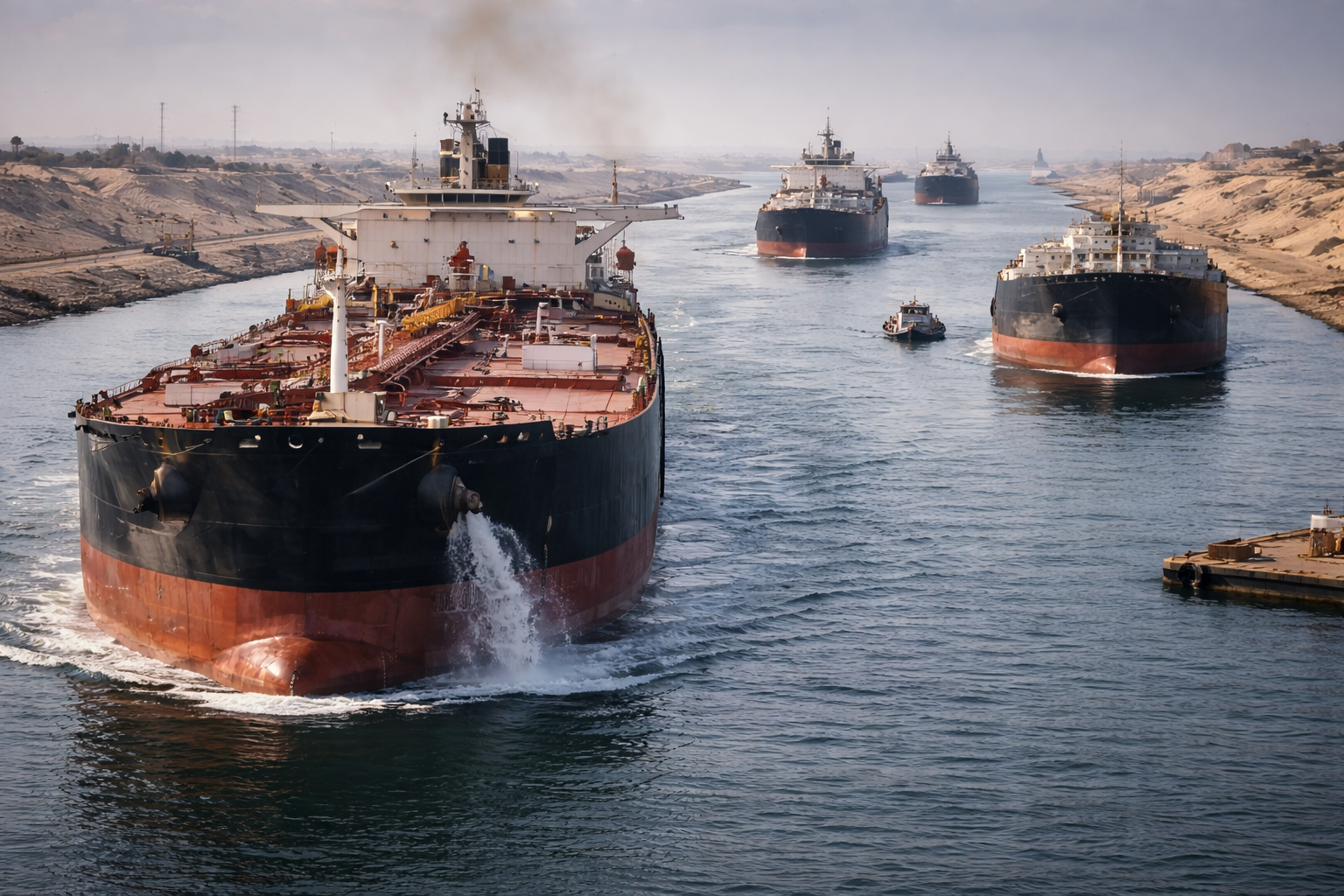
Oil prices increased by 3% on Wednesday due to disruptions in Middle East supplies stemming from the US-Israeli conflict with Iran.
However, the rate of increase moderated compared to previous sessions after President Donald Trump proposed the possibility of the US Navy escorting vessels through the Strait of Hormuz.
A significant security framework focused on safeguarding commercial shipping routes throughout the Arabian Sea, particularly the highly vulnerable Strait of Hormuz, was pledged by Trump late on Tuesday.
“Knowing that oil and Strait of Hormuz dynamics were the main contributors to market panic, it isn’t surprising to see such movement and easing in sentiment,” Elior Manier, market analyst at Marketpulse, said in a note.
The West Texas Intermediate crude oil last traded at $76.25 per barrel, up 2.4%, while Brent was at $83.52 a barrel, up 2.5%.
At one point on Tuesday, both benchmarks had risen by more than 3%.
On Tuesday, Brent oil prices climbed past $85 per barrel, hitting a peak not seen since July 2024.
Geopolitical tensions in the Middle East remained high
On Tuesday, a coordinated effort saw Israeli and US forces target various locations in Iran.
In retaliation, Iran launched strikes against energy infrastructure in a critical region responsible for almost a third of the world’s oil supply.
Reuters was informed by officials that Iraq, OPEC’s second-largest crude producer, has significantly reduced its output by nearly 1.5 million barrels per day, approximately half its total production.
This reduction is primarily due to constraints in storage capacity and the unavailability of an export route.
The US, according to Trump, will guarantee that vessels can navigate the Strait of Hormuz and will provide naval escorts if necessary.
The introduction of these guarantees coincides with insurers withdrawing war risk coverage for ships navigating the Strait of Hormuz.
“This is welcome news, but clearly it won’t happen overnight. Naval escorts would be helpful, but again, this effort will take time,” Warren Patterson, head of commodities strategy at ING Group, said in a report.
Naval escorts will be sitting ducks to Iranian attacks.
The US might postpone escorting vessels until it determines that Iran’s capacity for attack has been weakened.
China has also demanded the unimpeded passage of energy shipments through the Strait of Hormuz.
However, as the Iranian regime struggles for survival, it might disregard these demands, according to Patterson.
Oil flows are being affected further upstream due to the disruption in the Strait.
Iraq is reportedly shutting down 1.2 million barrels per day of production, according to ING.
This includes output from its largest field, Rumaila, as well as from West Qurna 2.
Disruptions likely to be short-lived
Meanwhile, analysts with Commerzbank AG believe that the disruption of supplies from the Strait of Hormuz would be short-lived.
Global oil stocks, according to the International Energy Agency’s assessment, reached their highest level since March 2021 last year, providing a significant buffer.
The total rose by 477 million barrels to just under 8.2 billion barrels.
The majority of this increase was in crude oil, with notable additions in China (+111 million barrels) and in oil stored on tankers at sea (+248 million barrels).
It is worth noting that 179 million barrels of this total are reportedly sanctioned oil, according to Commerzbank.
Commercial OECD oil stocks reached 2.84 billion barrels at the close of 2025, according to IEA data, marking the first time since February 2021 that they have surpassed the five-year average.
The rise in oil product stocks was the primary driver for this change, the German bank said in a report.
The US currently holds 415.4 million barrels in its Strategic Petroleum Reserve (SPR), which is the highest level recorded since September 2022.
Although the reserves have increased by approximately 60 million barrels over the past two years, they remain nearly 200 million barrels lower than the level at the start of 2022.
This significant difference is a result of the large-scale reserve releases made by the US government in response to the outbreak of the war in Ukraine.
Coverage for one year
“Total global oil reserves would thus theoretically cover a complete loss of supplies through the Strait of Hormuz for one year,” Carsten Fritsch, commodity analyst at Commerzbank, said.
“In this extreme case, commercial OECD reserves would last for four months, while strategic oil reserves in the US would last for a good 20 days.”
A total disruption of supplies through the Strait of Hormuz for over 12 days would be covered by the increased volume of oil stored in tankers.
Of this disruption, sanctioned oil accounts for 9 days.
Regional bottlenecks are possible with over 80% of Middle East oil being shipped to Asia, mainly China, India, South Korea, and Japan.
Should the need arise, both India and China have the option of increasing their reliance on Russian oil imports.
“Obviously, the longer disruptions persist, the more upstream production shut-ins we will see from the region (Iran and Middle East),” ING’s Patterson said.
The concentration of OPEC’s spare production capacity primarily in the Persian Gulf presents a significant problem: it offers minimal assistance to the market, particularly during disruptions in the Strait of Hormuz.
“Clearly, stronger OPEC output would help the market rebuild inventories once oil flows resume,” Patterson added.
The post Oil rises 3%; global reserves could offset Hormuz disruption appeared first on Invezz