
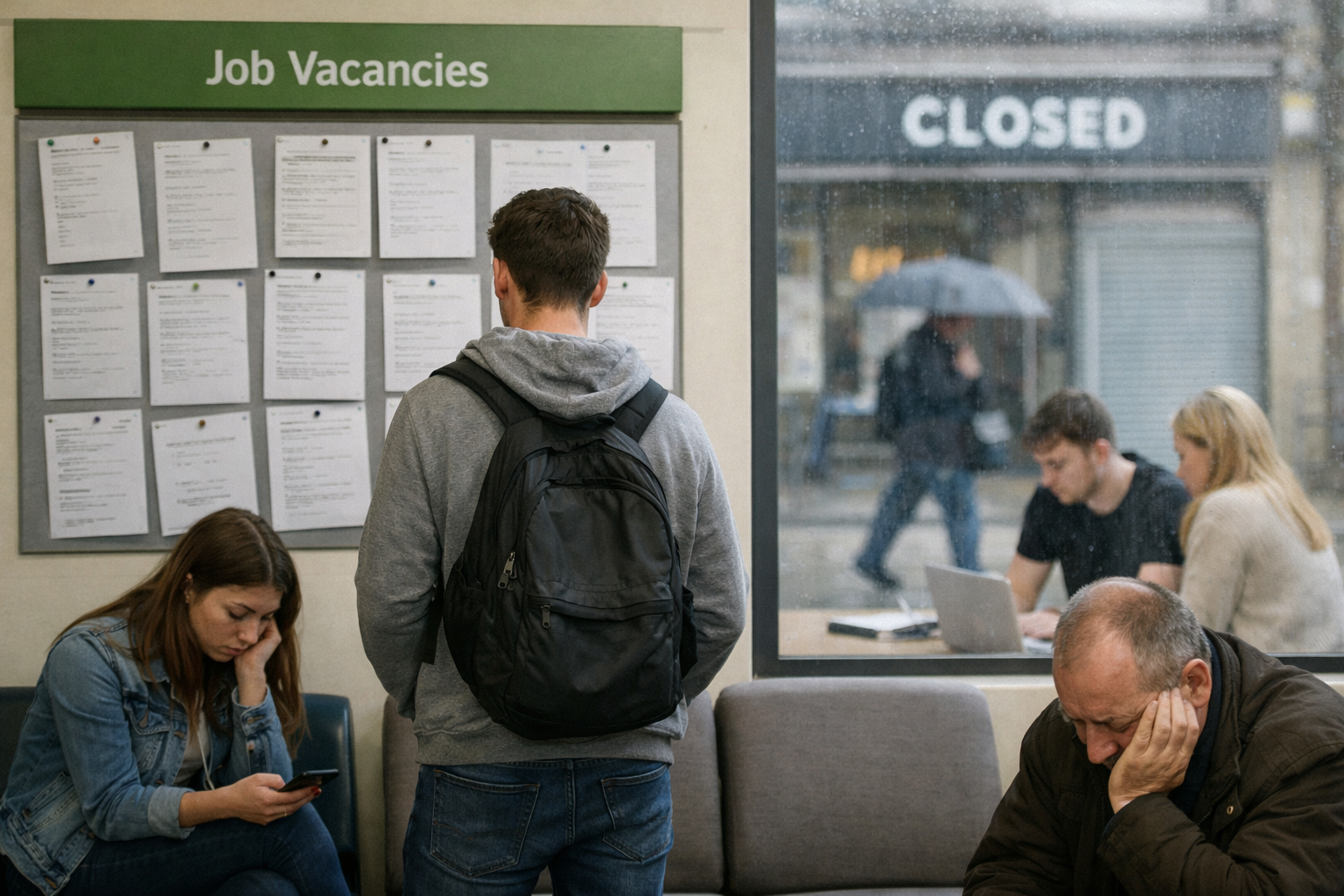
The UK labour market has started 2026 under pressure, with job adverts falling to their lowest level since the pandemic.
New research from the job search site Adzuna shows advertised vacancies dropped by 3% in January to 695,000. It marks the first time listings have fallen below 700,000 since January 2021.
The data arrives days after official figures showed unemployment rising to a five-year high of 5.2%.
Wage growth has also moderated, adding to concerns that recruitment activity is losing momentum across the economy.
The combination of rising joblessness and fewer listings signals a clear cooling in labour demand at the start of the year.
Youth impact
The decline has been particularly visible among younger workers.
Graduate vacancies fell below 10,000 in January, the first time they have dropped to that level since Adzuna began tracking the data in 2016.
Unemployment among 18 to 24-year-olds climbed to 14% in the final three months of 2025.
Excluding the pandemic period, the rate stands at nearly 11%, the highest in five years.
The figures have raised concerns that Britain is slipping in global youth employment comparisons.
The overall vacancy drop extends a downward trend that took hold in late 2025.
Advertised roles are down 16% compared with January last year and almost 20% lower than six months earlier.
The shift points to a marked slowdown in hiring since mid 2025, with fewer entry-level openings available across sectors.
Regional strain
Vacancies declined across the UK, though London recorded the sharpest monthly fall.
Advertised roles in the capital dropped by nearly 6% in January, underlining weaker demand in one of the country’s largest employment hubs.
Competition for each role has intensified. There were 2.4 jobseekers per vacancy last month, up from 2.27 in December.
The most searched for positions included warehouse staff, healthcare support workers, lorry drivers, labourers, and kitchen assistants.
The search data suggests continued demand in logistics, care, and manual occupations even as total listings fall, pointing to ongoing needs in essential services.
Costs and pay
The slowdown in recruitment comes as employers adjust to higher labour costs.
Increases in national insurance contributions and the minimum wage, announced by Chancellor Rachel Reeves in her last two budgets, have added to payroll expenses and altered hiring plans for some firms.
At the same time, some businesses are prioritising investment in automation and artificial intelligence tools rather than expanding headcount.
This shift has coincided with the sharp contraction in advertised roles and a more cautious approach to recruitment.
Despite the fall in vacancies, wage growth remains a relative bright spot. Average advertised salaries rose to £43,289 in January.
That represents an annual increase of almost 6% and remains comfortably above inflation, which fell to 3% last month.
The divergence between rising pay and shrinking job listings suggests employers are becoming more selective while still competing for specific skills.
For many applicants, however, the immediate reality is fewer opportunities and greater competition for each vacancy.
The post UK job vacancies hit post-pandemic low as hiring slows appeared first on Invezz