
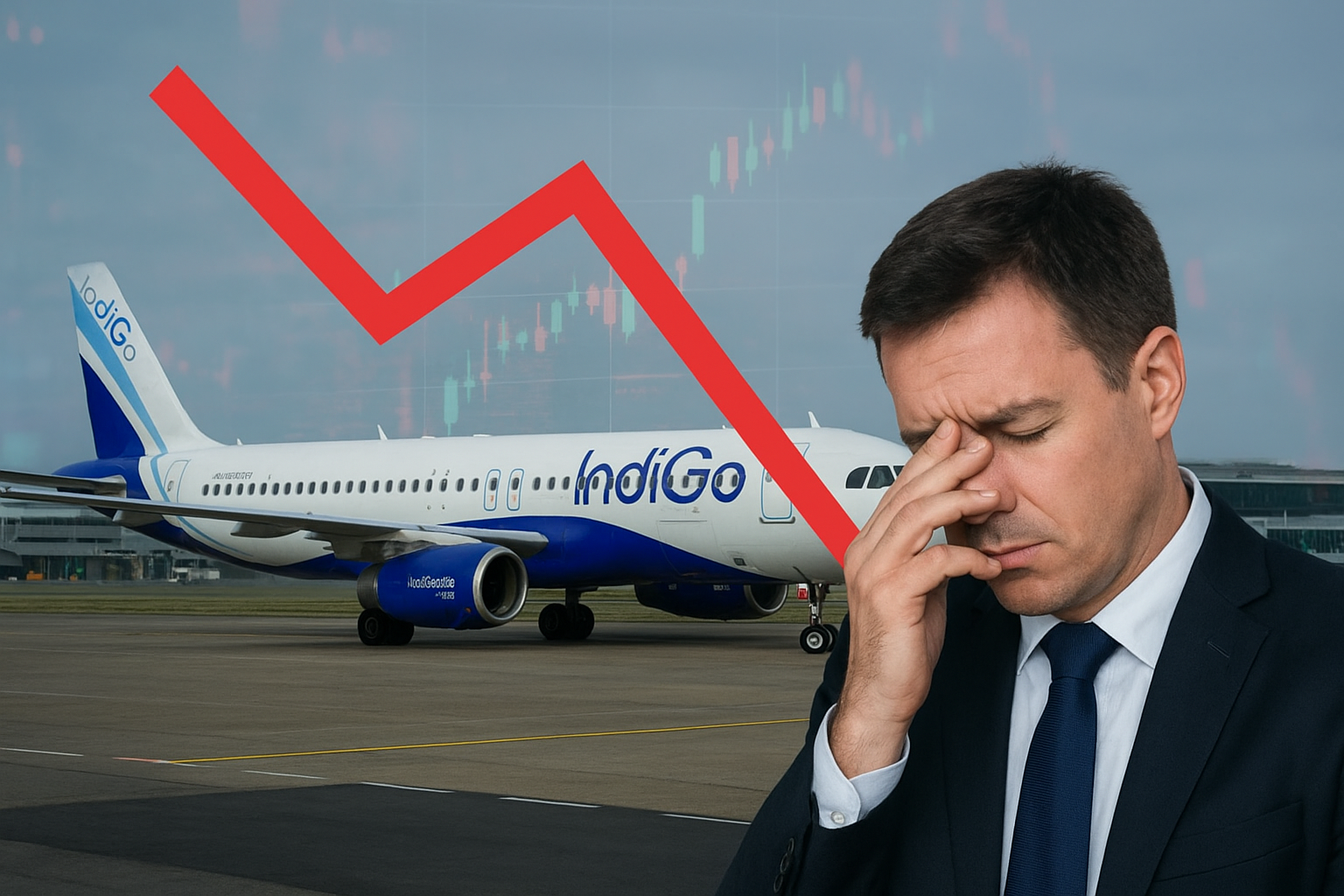
InterGlobe Aviation, the operator of IndiGo, saw its share price fall more than 7% on Monday as the fallout from its widespread flight cancellations continued, prompting intensified scrutiny from India’s aviation regulator.
The stock is now headed for its seventh straight session of losses after the airline cancelled more than 2,000 flights last week, leaving thousands of passengers stranded, disrupting schedules at major airports and forcing the government to step in to curb a spike in airfares.
The Directorate General of Civil Aviation issued a final 6 pm Monday deadline to IndiGo chief executive Pieter Elbers to respond to a show-cause notice alleging serious operational lapses.
The regulator granted a one-time 24-hour extension after the airline sought more time, citing constraints linked to ongoing disruptions.
Regulator flags lack of preparedness under new duty-time norms
The DGCA’s notice accused India’s largest airline of significant failures in planning, oversight and resource management.
The regulator said IndiGo had not adequately prepared for revised Flight Duty Time Limitation (FDTL) rules that came into effect recently, and pointed to shortcomings in mandatory passenger support during the disruption.
A substantial contributor to the chaos has been an acute shortage of crew, especially pilots, following the implementation of the more stringent FDTL norms.
The updated rules mandate increased rest hours and more humane rostering practices, requiring airlines to reconfigure their networks.
IndiGo has struggled to adjust its schedules quickly enough, resulting in cascading cancellations and persistent delays.
IndiGo’s cancellations continued into Monday, causing fresh congestion at several airports.
Delhi airport issued an early-morning advisory warning passengers of unstable schedules as the carrier worked to restore normal operations.
Analysts say cost pressures could weigh on stock
The turbulence has weighed heavily on IndiGo’s stock, which has lost more than 13% in the past five trading days and more than 10% over the past month.
Over the last six months, shares have slipped over 12%, though the stock remains up nearly 9% in 2025 to date.
Domestic brokerage JM Financial remained cautious, keeping a reduce rating with a target price of Rs 5,570.
It said the disruption stemmed from the dual impact of FDTL implementation and recent Airbus software upgrade challenges.
The firm warned that the incident could push structural costs higher in future years, particularly CASK ex-fuel-ex-forex, depending on regulatory action.
JM Financial estimated an 8–9% earnings hit for FY26 if the situation extends for around 15 days, adding that potential penalties and management changes could weigh further on the stock.
“Near-term, we estimate earnings hit of 8-9% for FY26 if the situation lasts for a total of ~15 days. We await further clarity to revise our earnings estimates, given it’s a developing situation. Even as the FY26 earnings hit has been priced in, the stock is yet to price in 1) structural cost increase driven by regulatory actions 2) one time penalty 3) management change if any,” it added.
Investec maintained its sell view with a price target of Rs 4,040, noting that the hope of a strong third-quarter recovery has weakened following a sluggish first half.
It flagged rising aviation turbine fuel prices, a record-low rupee at 90 per dollar and the additional costs likely from IndiGo’s full compliance with the FDTL norms by February 10, 2026.
It estimated that compliance may require 20% more pilots per aircraft, increasing costs by roughly Rs 0.10 per available seat kilometre.
Why some analysts are still bullish
UBS maintained its buy rating on the stock but cut its target price to Rs 6,350, implying an upside of more than 18% from the previous close.
The brokerage stated that IndiGo’s inadequate preparation for the new FDTL norms led directly to the disruptions and raised its cost estimates for FY26–FY28 to account for higher crew needs and increased operational expenses amid a weaker rupee.
Despite near-term challenges, UBS said IndiGo’s long-term growth story remains intact, supported by international expansion.
However, it warned that further rupee depreciation and any contingent costs arising from the disruptions pose downside risks.
Jefferies also retained a buy call with a target price of Rs 7,025, signalling nearly 31% potential upside.
The brokerage said IndiGo had been hit hardest by the timing of the FDTL transition, which coincided with capacity additions, technical concerns and congestion, amplifying operational pressures.
It noted that the airline expects normalcy by mid-December but will face higher costs in the interim.
The post IndiGo stock slumps 7%: analysts warn rising costs could weigh on stock appeared first on Invezz